Five practices for preparation or recovery — sensory input, movement variability, and breath rather than force.
Sep 2026 · Four minutes.
Fascia is the connective-tissue network that surrounds and links muscles, bones, nerves, blood vessels, and organs. It responds to movement, load, stress, and recovery.
The goal of these practices is not to force tissue. It is to give your body comfortable sensory input, movement variability, pressure, breath, and load, so it can organize movement with less unnecessary guarding.
Use them as preparation or as recovery. More pressure is not better.
Why: introduces rhythmic loading through the feet and legs, and lets you explore spring and whole-body movement.
Set-up: stand tall, feet comfortable, knees unlocked. Hold a wall or chair if you need to.
How: soften and straighten the knees slightly so the heels become light. Let the heels gently meet the floor. Keep jaw, hands, and shoulders relaxed.
How long: thirty to sixty seconds, then rest and reassess.
Feel for: quiet feet, easy breathing, and a subtle rebound — never pounding.
Why: coordinates diaphragm, ribcage, abdominal wall, and pelvic floor while reducing unnecessary bracing.
Set-up: sit, stand, or lie comfortably. Place your hands around the lower side ribs.
How: inhale through the nose and let the ribs widen into your hands and toward the back. Exhale slowly and let the ribs soften inward, without forcing the abdomen flat.
How long: six to ten slow breaths.
Feel for: expansion around the sides and back of the ribs, shoulders staying quiet.
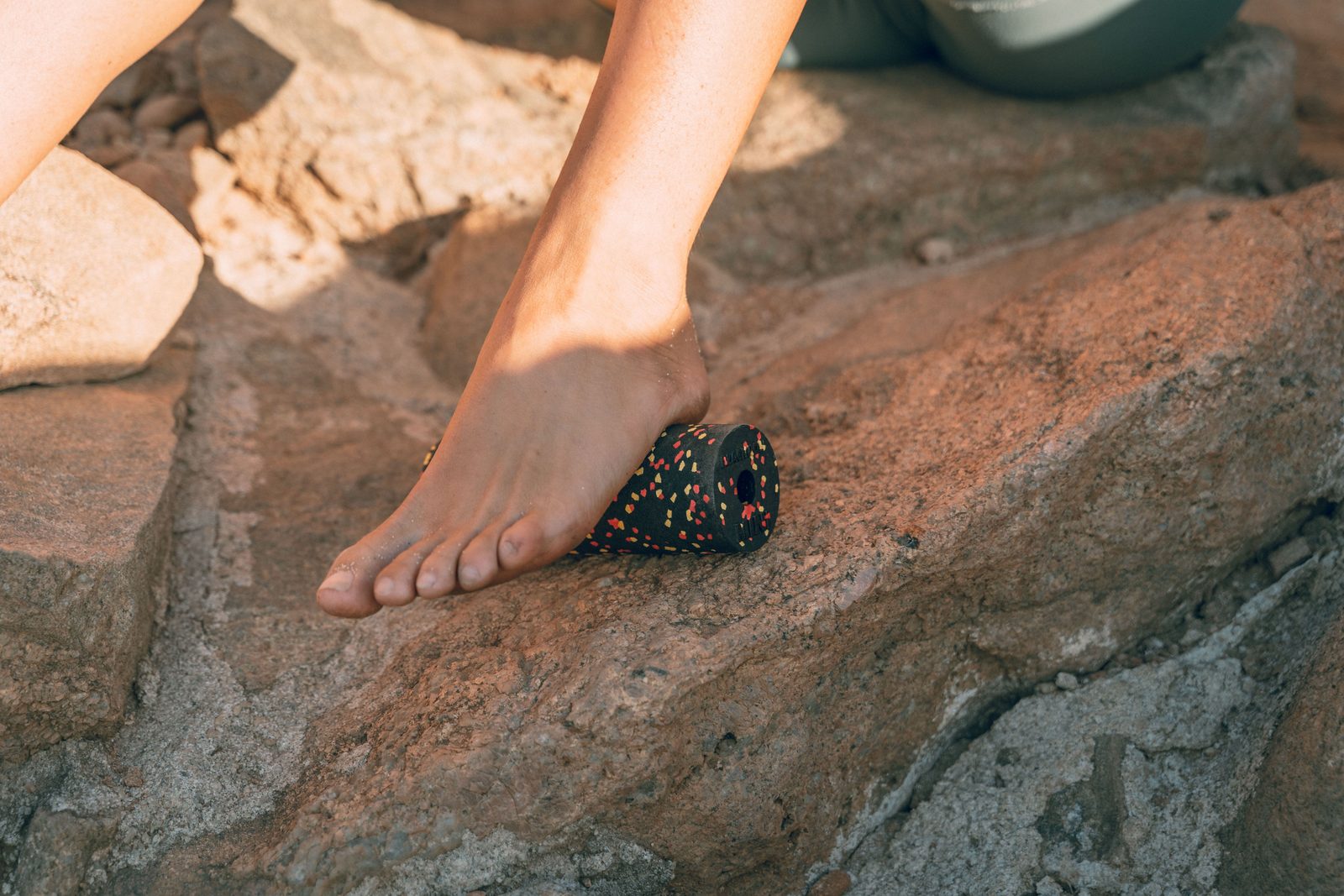
Why: gives the brain clearer sensory information from the foot and encourages movement through the plantar tissues.
Set-up: stand beside a wall or chair with a soft therapy ball under one foot.
How: explore slowly from heel toward forefoot. Pause in three to five places rather than rolling aggressively. Add only enough weight to stay comfortable, and keep breathing.
How long: one to two minutes per foot.
Feel for: more floor contact or easier toe movement afterward. No sharp pain, tingling, or numbness.
Why: links shoulder reach, eye movement, rib rotation, breath, and weight shift.
Set-up: stand sideways to a wall with the near hand lightly supported. Both feet grounded, knees soft.
How: reach the free arm forward and slightly across, allowing the ribs to rotate. Let your eyes follow your hand. Exhale as you return. Keep the range easy.
How long: five to eight slow repetitions each side.
Feel for: movement distributed through the ribs and upper back, rather than pinching in the shoulder or low back.
Why: uses sustained, tolerable pressure as sensory input, without digging into tissue.
Set-up: place a soft ball between your body and a wall at a muscular area such as the upper back or glute. Avoid the spine, the front of the neck, the abdomen, and any acute injury.
How: lean in only enough to feel mild-to-moderate pressure. Stay still and breathe. Then make a small shift around the ball. The goal is curiosity, not chasing pain.
How long: thirty to ninety seconds per area. Two or three areas is enough.
Feel for: pressure that settles or eases. Stop if symptoms spread, intensify, or become sharp, numb, or electrical.
Thirty to sixty seconds of gentle rebound, six slow 360° breaths, one minute each foot, then five wall-supported reaches each side.
An honest note: persistent pain, swelling, weakness, numbness, unexplained symptoms, recent surgery, significant osteoporosis, vascular conditions, cancer treatment, or substantial balance impairment deserve individualized medical or rehabilitation guidance before you add pressure or load.