What changes in how you use fuel and hold bone, and the loading that nutrients alone cannot replace.
Sep 2026 · Four minutes.
Two things change quietly in midlife, and both respond to load.
As estrogen, progesterone, and testosterone change, so does how the body uses fuel, builds muscle, and stores fat. Women commonly notice more fat storage around the abdomen, reduced insulin sensitivity, slower muscle protein synthesis, more inflammation, and less mitochondrial efficiency.
This is not a failure of willpower. It is a different metabolic environment, and it responds to different inputs than the one you had at thirty.
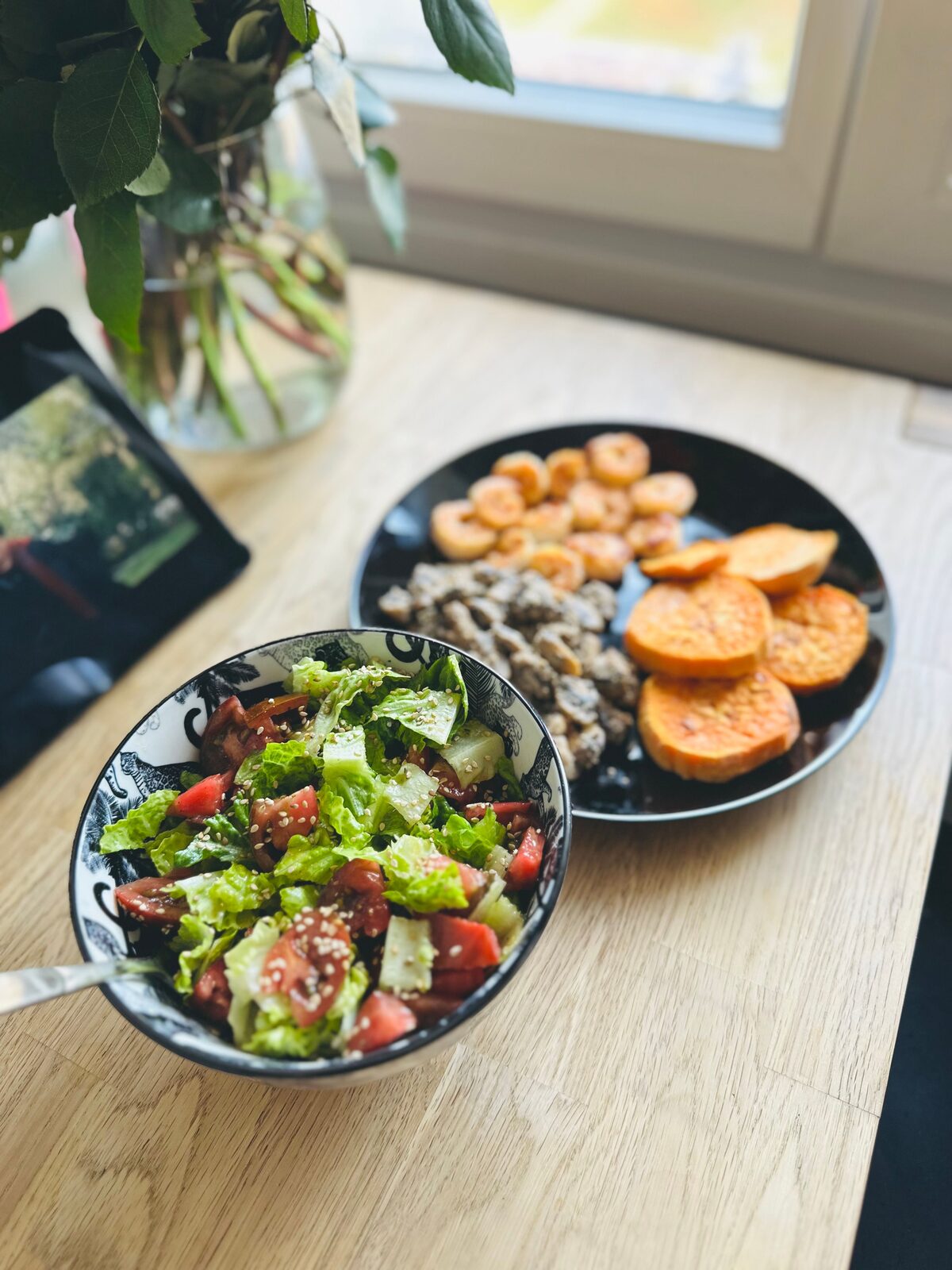
Protein at thirty to forty grams per meal. Fiber at thirty to thirty-five grams a day. Healthy fats. Less alcohol. Stable blood sugar. Anti-inflammatory foods — berries, leafy greens, olive oil, salmon and sardines, nuts and seeds, turmeric.
For movement: strength training three times a week, Zone 2 cardio two to three times a week, walking after meals, and less high-intensity work when stress is already high.
Estrogen decline increases bone turnover. Without strength training, protein, minerals, and vitamin D, density decreases.
Signs worth paying attention to: fractures from low-impact events, height loss, back pain, weakening grip strength, and changes in balance.
Bone responds to mechanical strain. Calcium provides substrate, vitamin D supports absorption, protein supplies matrix — but none of them provide the signal. Resistance training and appropriate impact do.
Vitamin D with K2, magnesium, omega-3, calcium with food first, collagen with vitamin C, creatine — these come up constantly in conversations about bone and metabolism.
Some are reasonable for some women. More is not automatically better, and excessive supplemental calcium or vitamin D can cause harm. Dose and need should be individualized with a clinician who knows your labs and medications.
Bone health is not captured by a DEXA number alone. Fracture history, medications, falls, nutrition, strength, and other risks all matter. A fragility fracture, repeated falls, sudden loss of strength, or a meaningful decline in balance or walking capacity deserves assessment.